
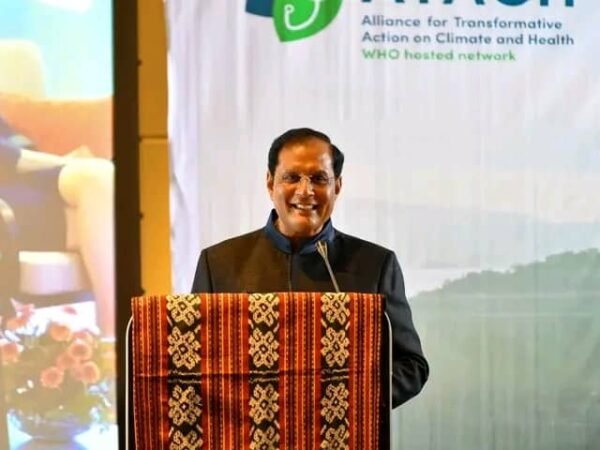
Dili, February 26, 2025 (Média Democracia) – The World Health Organization (WHO) South-East Asia Regional Technical Meeting on Climate Change and Health which will be held in Timor-Leste on 25-28 February 2025. The high-level meeting will bring together delegates from the country, the 10 WHO South-East Asia members, WHO experts, WHO from other countries, and representatives from donor agencies and collaborating partners. The event will be held on Monday.
WHO Representative in Timor-Leste, Arvind Mathur said that climate change is an increasingly urgent threat to global public health, exacerbating existing inequalities and vulnerabilities. The health sector alone accounts for 5% of global stove-effect greenhouse gas emissions. This underscores the urgent need for sustainable and climate-resilient health systems.
“The impact of climate change on health is undeniable. Rising temperatures, extreme meteorological events and changing disease standards have already affected more than million people. Strengthening climate-resilient health systems is not an option, it is an imperative,” said WHO representative in Timor-Leste, Arvind Mathur.
He continued that the Alliance Transformative Action of Climate Health (ATACH) is a WHO-led initiative that serves as a global volunteer platform for countries and stakeholders to share insights, enhance technical cooperation and accelerate action on resilient and sustainable health systems for climate, while supporting, defining and sustaining health promotion from other sectors such as agriculture, food, electricity.
“The initiative was launched in response to the compromises made at COP26 to integrate climate and health priorities into national, regional and global policies. ATACH members include countries/territories (represented by their Ministries of Health), government agencies, multilateral and UN organizations, global climate health finance mechanisms and non-state actors,” said the WHO representative.
He added that as a small island nation that is still developing, Timor-Leste is particularly vulnerable to the impacts of climate change. Frequent extreme events and conditions such as rising sea levels and salt intrusion impact local communities and affect community well-being, survival, physical and mental health.
“The climate crisis is impacting those who are more vulnerable to health and nutrition. Malnutrition and disease caused by climate change create a cycle of harm. Sick people struggle to maintain nutrition, and undernourished people are at high risk of disease,” said Dr. Mathir.
He emphasized that the meeting will have an advocacy and insight exchange platform, where participating countries will showcase their realizations and innovative approaches to solving climate change and health challenges.
“This is the first high-level technical meeting on climate change and health to be hosted by Timor-Leste. It provides an important opportunity for the government and the Ministry of Health to highlight their efforts and reaffirm their commitment to the health challenges faced in relation to climate at the WHO regional platform,” he said.
He further explained that the Regional Technical Meeting will be an critical platform for knowledge sharing, capacity building and disseminating regional collaboration. Participants will discuss strategies to access international climate finance and implement adaptation and mitigation measures in the health sector and will also contribute to the health agenda action of the upcoming COP30.
Reported by : Nelfiano
Picture by : Media Officer of WHO