
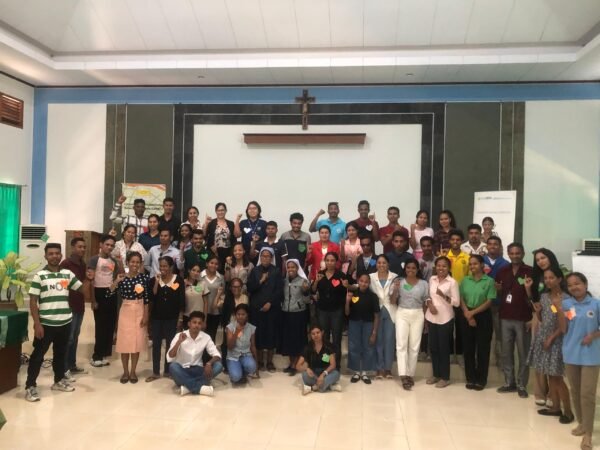
Dili, August 15, 2025 (Média Democracia) – The Community Based Rehabilitation Network Timor-Leste (CBRNTL), in collaboration with UN Women, the Human Rights Advisory Unit, and UNICEF, held a workshop aimed at strengthening advocacy, monitoring, and reporting on the rights of people with disabilities in Timor-Leste, to ensure inclusion nationwide. The workshop was held at the JP Comoro Hall this week, on Thursday.
CBRNTL Executive Director, Norberta da Silva, stated that the objective of today’s workshop was to discuss and review advocacy service mechanisms, particularly in conducting monitoring for people with disabilities (PwDs) in the country.
“Today’s workshop strengthens advocacy, monitoring, and reporting mechanisms on the situation of people with disabilities, with the aim of enabling disability organizations and civil society to carry out stronger advocacy. In advocacy work, it is important to understand the mechanisms, the procedures, and the evidence needed to make effective advocacy. Advocacy can influence changes in the implementation of laws and policies already in place in Timor-Leste, to protect and guarantee the rights of people with disabilities,” said Norberta da Silva.
The Executive Director added that people with disabilities continue to face various barriers in different sectors because of their condition. For this reason, organizations continue their advocacy efforts to influence all stakeholders so that no one is left behind.
“People with disabilities face many barriers to accessing essential services such as education, health, and justice. They still experience discrimination based on different types of disabilities and also face violence, sometimes from their own families. Therefore, NGOs need to carry out advocacy to influence policy change and transform community perceptions, to raise awareness and ensure that everyone and all family members can live fully in their families and communities,” she continued.
She emphasized that discrimination in education, health, and justice persists based on disability type, alongside violence from families, making advocacy essential to push for political change and community mindset shifts to ensure inclusion.
Meanwhile, the Representative of the Ombudsman for Human Rights and Justice (PDHJ), Filomena Maria de Fatuna Dias, stated that PDHJ’s participation in the workshop was as a key institution to help address human rights and disability rights issues in the country.
“Today we presented an overview of human rights for people with disabilities, linked to fundamental freedoms and the CRPD (Convention on the Rights of Persons with Disabilities) that we have ratified. The main objective is to use advocacy strategies to convey to relevant stakeholders, government, and all public entities how to better protect the rights of people with disabilities,” said Filomena Maria de Fatuna Dias.
She affirmed that the Timor-Leste Constitution guarantees the rights of people with disabilities and the duty of the state to protect and promote equal rights for all citizens.
“We know that the Constitution guarantees that people with disabilities are not to be discriminated against, and the State has also ratified the CRPD in 2023. This ratification is not only of the Convention itself but also of the Optional Protocol, which provides a channel for individuals to submit complaints to the committee in cases of rights violations. This is one of the measures when the state ratifies and guarantees fundamental rights enshrined in the Constitution or our main laws, it is therefore the State’s duty to promote and comply,” she said.
She underlined that this 3-day workshop would help to advocate to the State, the government, and relevant stakeholders on how to develop public policies that respect the human dignity of people with disabilities and uphold human rights principles for all PwDs in the country.
The workshop participants were mostly from organizations of people with disabilities, including civil society, and both local and international development partners from across the country.
Reporter: Nelfiano
Photo: Nelfiano