
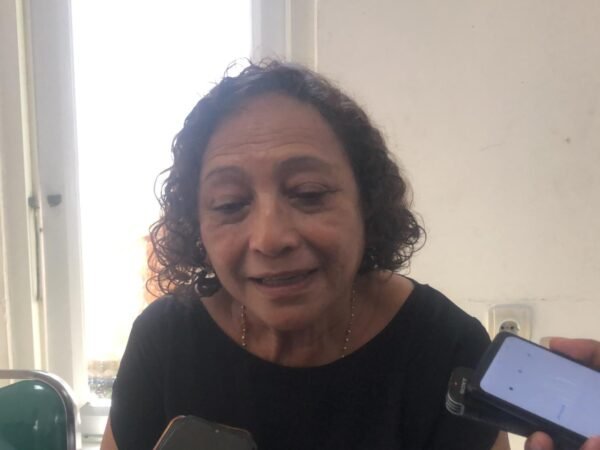
Dili, May 20, 2025 (Média Democracia) – Maria Domingas Fernandes Alves, a renowned female fighter for self-determination, shared a heartfelt and hopeful message in preparation for the 23rd anniversary celebration of Timor-Leste’s Restoration of Independence Day on 20 May.
She expressed deep gratitude to God and the sacred land of Timor-Leste, as well as to all the national heroes who took part in the struggle. She emphasized her active role in the development process, especially over the past 23 years, constantly reminding others of the many people who contributed to the resistance of the Timorese population.
“For nearly three years I was in the bush, where many people took part in the struggle. When everyone participates with a common goal, men and women alike understand what is needed to serve Timor-Leste’s self-governance, how to develop our nation, and how to build our state,” said Maria Domingas Fernandes Alves.
She further noted that despite the early momentum in state-building over the past years before full independence was realized 23 years ago, the XI Legislature of the government has since created bodies to promote women’s participation in government, starting with the Office for the Promotion of Equality, the State Secretariat for Equality, and female parliamentary representation through political parties. Many local and international NGOs are now led by women.
“We see that many children are in school, but we are witnessing a reversal because the youth population is rapidly increasing. We, who began the struggle for self-determination, were once worried about Indonesia’s occupation of Timor, fearing the country would be lost. Now, even though independence has been achieved, many youth are eager to leave the country due to employment issues. That desire to migrate changes their lives,” she added.
Women’s participation is still vital, particularly in civil society target groups. However, their contributions at the village and sub-village levels are no longer as organized as during the resistance era.
“During the resistance, everything was organized under a rotational system. Everyone participated in groups, farming and harvesting together, and then dividing the benefits into three parts: one for the FALINTIL, one for the community, and one for the family. Now, in independence, the villages and sub-villages are no longer organized in the same way, and people are more focused on individual lives,” she said.
She emphasized that after 23 years of independence, it is essential for people, at the age when they can already start families, to recognize what is still lacking, and how we can improve behaviors and attitudes in our family and community life through mutual respect and support.
“We can see development across the country, many Chinese people have now reached even rural areas to open shops. The roads are improving, and we can feel that change. What we always emphasize is the need for transformation, and we see that there are now many churches and chapels, which also reflect progress,” she explained.
She emphasized that since the first government, she has participated in the process of establishing municipalities, and through that, women across Timor-Leste have been represented. Her concern is that women must be involved in various sectors and enjoy their freedoms.
“Today, we still hear that women who were victims during the resistance era, and even their younger sisters, continue to suffer. Step-fathers are sexually abusing them, these issues continue to occur. FOKUPERS also receives reports of crimes such as sexual violence and fathers impregnating their daughters. We still don’t fully understand this phenomenon or why it continues to happen. It shows that civic education and moral formation are still lacking among the population,” she reaffirmed.
She stated that while people experience democracy and freedom, this also reflects the effects of digital openness. Unlike in the past, people today must be more mindful and cautious with digitalization, because this freedom has made many things happen, so everyone must pay attention to prevent future consequences.
Her final message to all is a call to responsibility as women citizens, believing that as long as we have breath, we must speak up and demonstrate good practices. While the government and the state must put structures in place to support people, success ultimately depends on the will of each individual. If we refuse to act, then we are the ones who will miss out on the opportunities.
Reporting: Nelfiano
Photo: Nelfiano