
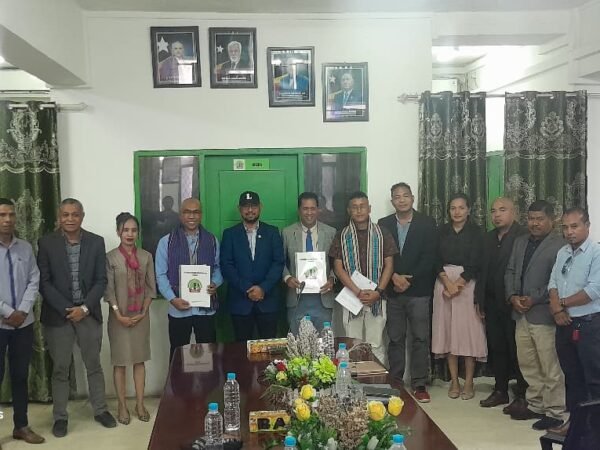
Dili, September 18, 2025 (Média Democracia) – The State Secretariat for Cooperatives (SECoop) held a meeting to sign a Memorandum of Understanding with the Indonesian company Bali Honey Madu to conduct research on potential areas for beekeeping in Timor-Leste. The signing ceremony took place at the SECoop Cabinet Hall, Akait, on Tuesday this week.
Secretary of State for Cooperatives, Arsénio Pereira, stated that this agreement, known as a Letter of Agreement (LoA), allows the company to carry out a major study to identify potential areas for beekeeping in Timor-Leste that can support local honey production.
“Today we signed the agreement, and within this week they will begin their research. Our cooperatives that have previously engaged in beekeeping will also travel to Indonesia to directly observe honey cultivation there, and later apply it back here. Beekeeping is not just about having bees, but about following proper methods, including production techniques,” said Secretary of State for Cooperatives, Arsénio Pereira.
He further explained that this program is very important for honey production, as so far honey has not been fully utilized, and most people only sell it raw. With the support of Bali Honey Madu, cooperatives will learn how to improve cultivation techniques, packaging, and quality to ensure better market value.
“In relation to the budget, we have allocated around $3,000 for these activities. The agreement will last for two years, during which time our technical staff will design and carry out cooperation with Bali Honey Madu in Indonesia,” he added.
Meanwhile, President of Bali Honey Madu, Ismail Marzuki, expressed his gratitude to the Government of Timor-Leste, through SECoop, for this cooperation, which has been in the making since 2018 and is now formalized with the signing of this agreement.
“We from Bali Honey Madu are honored to work together with SECoop to explore potential honey production areas in Timor-Leste. We will share our experience and support Timor-Leste in developing honey production both domestically and for export,” said Ismail Marzuki.
He added that the experience to be shared includes techniques from beekeeping and production to marketing, to help Timorese workers better understand how to cultivate bees effectively using methods already applied by the company.
“Within this week, we will visit five municipalities, each on a different day, to begin mapping potential floral resources with high quality in Timor-Leste that could support beekeeping. Honey bees can then produce large volumes of honey and support high-quality production,” Ismail explained.
He emphasized that during this one-week period, research will be conducted together with the SECoop team to identify the most suitable areas for beekeeping, since this requires locations rich in flowering plants such as Kaizu and others that can provide abundant nectar for bees.
According to SECoop data, the five municipalities identified for the research are Liquiça, Bobonaro, Aileu, Ermera, and Manatuto. However, beekeeping is possible in all municipalities of Timor-Leste given the country’s abundant floral resources.
Report: Nelfiano
Photo: Nelfiano