
Dili, June 16, 2025 (Média Democracia) – The Secretary of State for Cooperatives (SEKoop) has declared a commitment to stimulate economic growth in the region through planned programs and cooperative-led activities in those regions.
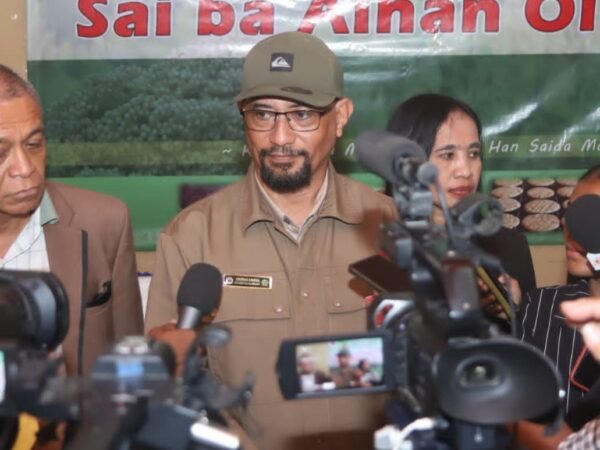
Secretary of State for Cooperatives, Arsénio Pereira da Silva, expressed his satisfaction during a meeting with the National Directorate for Promotion, Products, and Cooperatives, alongside its staff and representatives of various cooperative groups actively engaged in region economic activities.
“This Directorate continues to promote especially the products developed by cooperatives, because we recognize that the cooperative sector is vital for economic development in the country,” he told journalists at the Esperansa Delta hall (12 June).
He added that Bafo Kayrala is one of the raw materials for various products which cooperative groups can process and transform into food products, to then be brought to market. During this activity, several cooperatives participated by showcasing their services, such as cafeteria operations and small businesses. He expressed satisfaction in witnessing the collaboration of the National Directorate for Promotion, Products, and Cooperatives in this initiative.
“The economy of the people and their families is supported by cooperative products, which serve as an economic income bridge for households and contribute to nation economic growth. This mandate comes from the Constitution, particularly Article 138, which highlights the importance of three economic pillars: the public sector, private sector, and the cooperative sector,” he continued.
He explained that these three pillars serve as the economic foundation in the country. Currently, the economy is driven by cooperative movements and producer groups engaging in production. These groups pool their funds and then provide loans to carry out economic activities such as running cafeterias, manufacturing, and other small-scale businesses in the country.
“How do we stimulate the rural economy? It starts with families, and then the broader rural economy grows from there. We believe that in the future, the cooperative sector must contribute at least 2% to Timor-Leste’s economy,” he stated.
He emphasized that this target is modest, and the government has adopted policies in line with this approach, supporting cooperative movements in collaboration with other groups. Though they may start small, these initiatives help push the economy forward. In the next two weeks, SEKoop will facilitate the participation of potential women entrepreneurs in an event in Malaysia for a cooperative product dialogue.
“The goal is to learn from others and allow others to learn from us, by showcasing our products and identifying areas where we need to improve and diversify,” he stated.
He underlined the importance of competing in the regional market through locally produced goods, reducing reliance on imported products, and contributing significantly to nation economic development.
“We encourage producers to use raw materials from local agricultural communities. Just as other small industries do, they can transform these into products. This training, for example, used agricultural raw materials to make sweets and other goods, mainly using Bafo Kayrala and cassava. These are part of the SEKoop program for the next five years,” he emphasized.
He stated that this program has been approved by the National Parliament, and its policies and activities are embedded in the action plan. For example, the National Director of Product and Cooperative Promotion has provided training during the second quarter to individuals running these activities. As a result, they have acquired the skills needed to promote and process their own products.
He further explained that although the Ninth Government had initiated the program, unfortunately, he assumed the role of Secretary of State for Cooperatives only two years. The production efforts had just started when a change in policy occurred, causing a lack of continuity. However, the Ninth Government has continued the program, as it considers it important for the transformation of various local products in the country.
Report: Domingas
Photo: Domingas