
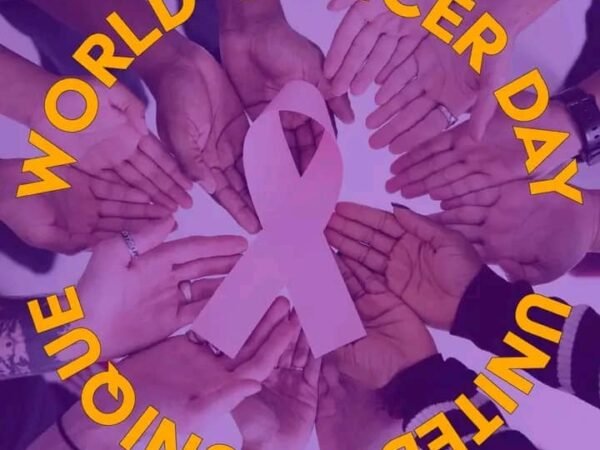
Dili, February 5, 2025 (Média Democracia) – The World Health Organization (WHO) on February 4 always commemorates World Cancer Day every year. Today marks twenty-five years since the signing of the Paris letter against cancer in the World Cancer Alert for the new millennium. The event was held on Friday last week.
WHO Regional Director for South-East Asia Saima Wazed said that on this year’s World Cancer Day with the theme, “United by Unique” which is a reminder of the collective compromise against cancer, WHO recognizes the unique experience of each patient and the value of person-centered care that from supplier of health services, family, friends and communities.
“WHO South-East Asia has 2.4 million new cancer cases in 2022, including 56,000 children and 1.5 million deaths. Among all WHO regions, this region has the highest rates of oral and oral cavity cancers, cervical cancer and neonatal cancers. It is estimated that by 2050 there will be an increase of 85% in the number of new cases and deaths in this region.” Said WHO Regional Director
She continued, in recent years, countries in the region have made significant progress in cancer control. Six countries have dedicated national plans for cancer control, and two countries have included cancer as part of their national Non-Communicable Diseases (NCD) plans to strategically direct cancer prevention and control activities.
“Following the successful completion of the Health Flagship project in 2020, where more than 90% of the target population received gastric, stomach and breast cancer screening, with positive screenings linked to diagnosis and treatment. The country is now integrating the health principle working model.” She said.
She added that through the “Cancer Anywhere” program, Thailand has adopted and implemented a universal health approach to cancer management. Eight countries have introduced national vaccination against Human Papillomavirus.
“The global initiative for childhood cancer is being implemented in ten countries through a network of regional agencies. Seven countries have operationally registered population-based cancers. In ten countries, tertiary cancer care is generally available, reaching 50% or more of patients in need. The region has experienced a more rapid decline in tobacco use as a major risk factor for a range of high-grade cancers. WHO is working with countries and all Member States which support this effort.” She continued
She stressed that these challenges are causing the response to cancer control to be inconsistent across countries. National cancer control programs and plans are not in line with evidence or good practices, resulting in their implementation being ineffective.
“Political orientation and control of prevalent cancer-causing agents in a region, such as betel nut, will not exist. Existing cancer prevention policies and programs have not been implemented comprehensively, and have resulted in more than a million cases of cancer that could have been avoided,” She added.
She said, cancer treatment included in the health benefit package is only in six countries. Specific cancer screening is still small, for example, cancer screening services coverage is at least 50% in seven countries and less than the 80% target that requires the elimination of cancer services as a public health problem.
“Delayed diagnosis, when treatment is often ineffective and more expensive. Inadequate national capacity, continues to manage the increasing burden of cancer. Not all countries in the region have functioning population-based cancer registries or national alert systems that incorporate cancer indicators into routine reporting. 3% of patients requiring palliative care are counted as receiving care.” She stressed.
She said the challenge was addressed through a contested, evidence-based approach, with WHO working with countries, members and partners to co-create the WHO Regional Strategy for comprehensive cancer prevention and treatment 2024-2030, the implementation of which was approved at the 77th Regional Committee Meeting.
To explain better, WHO will continue to work with all countries to try to reduce the gap in care, in collaboration with other UN agencies and development partners. In addition, WHO will strengthen more partnerships with communities, civil society, the private sector and other stakeholders. With a joint effort led by governments supported by WHO and partners through this collaboration, will work well together to address the increasing cancer.
Reported by : Nelfiano
Picture by : WHO Media Officer