
Dili, October 30, 2026 [Média Democracia] – The Coffee and Agroforestry Livelihood Improvement Project (CALIP), which will be implemented from 2022 to 2026, has completed its initial phase. However, support for the development of the coffee sector in Timor-Leste will continue until 2030, through additional funding of US$ 4.9 million, to increase coffee production, improve farmers’ livelihoods and promote sustainable agroforestry development.
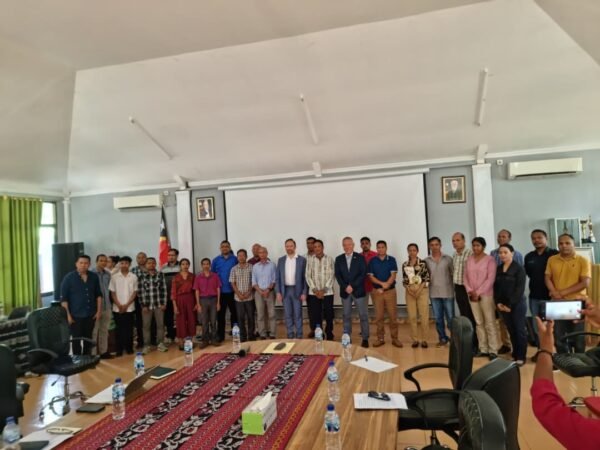
Secretary of State for Fisheries (SEP), Domingos da Conceição dos Santos, said the workshop was held to share information and results on the implementation of the CALIP project, which starts in 2022 and ends in 2026. The meeting was also an opportunity to hand over the equipment used by the project during operations in the field to technical teams.
“The workshop we held today is linked to the completion of the CALIP project, which will be implemented from 2022 to 2026. Therefore, this meeting is organized to share information and results of the project, and at the same time deliver the equipment used in the CALIP program to people who carry out activities in the field,” said Secretary of State Dominic. Conceição dos Santos, to journalists during the workshop in Comoro.
He explained that the objective of the CALIP project is to develop the coffee sector in Timor-Leste, especially in these municipalities, such as Aileu, Likisá, Ermera, Manufahi, Ainaro and Bobonaro.
“This project focuses on developing the coffee sector to improve the living conditions of farmers, especially those who grow coffee. The CALIP project is implemented in nine municipalities, namely Aileu, Likisá, Ermera, Manufahi, Ainaro and Bobonaro,” he said.
Although the initial phase of the CALIP project will be completed in 2026, support for the coffee sector will continue until 2030. This continuation will be supported by additional funding of US$ 4.9 million over four years, to continue to support coffee planting activities and develop other sector-related activities.
On the other hand, the National Director of the Asian Development Bank (ADB), Artur Andgsiar, expressed his gratitude to the Ministry of Agriculture, Livestock, Fisheries and Forestry (MALFF) for the leadership and efforts made during the implementation of the CALIP project.
He also expressed appreciation to the Government of Japan and all partners who contributed to the success of the project.
“I would like to express ADB’s sincere gratitude to the Ministry of Agriculture, Livestock, Fisheries and Forestry for organizing this important workshop and for its strong leadership during the implementation of the Coffee and Agroforestry Improvement Project, or CALIP. of the project,” he stated.
Artur Andgsiar said the workshop provided an important opportunity to evaluate the results achieved, learn lessons from project implementation and identify priorities to ensure sustainability and continued impact of investment in Timor-Leste’s coffee sector.
He also said that last week, ADB had the opportunity to participate in a field visit with MALFF leadership, local authorities, technical teams and farmer communities, to see directly the progress of coffee production in the field.
“These objectives are at the heart of this workshop. Last week, ADB had the privilege of participating in a field visit with MALFF leadership, local authorities, technical teams and farmer communities in the coffee production area. These visits provided a valuable opportunity to hear directly from farmers and observe the progress they have made. terrain,” he said.
He went on to explain that the experience of implementing CALIP shows an important lesson, that the development of the coffee sector is not only focused on increasing production, but also on strengthening resilience, promoting environmental sustainability, creating economic opportunities and ensuring that development benefits reach all members of the rural community.
According to him, the future of Timor-Leste’s coffee industry also depends on the capacity to engage and inspire young people. By supporting young people in the areas of knowledge, skills, innovation and viable economic opportunities, agriculture and agribusiness can be an attractive pathway for the next generation.
Therefore, investment in young people is considered an important investment to strengthen the competitiveness and sustainability of Timor-Leste’s coffee sector in the long term.
He affirmed that ADB will remain committed to support the development of the coffee sector, as the results of the CALIP project have shown positive progress. ADB will also continue to strengthen partnerships with MALFF and other partners through additional funding.
“ADB remains committed to supporting these goals. We are motivated by the results and lessons that have emerged from CALIP, and are pleased to continue our partnership with MALFF and other partners as activities advance through additional funding. This next phase presents an opportunity not only to consolidate the achievements achieved, but also to strengthen productivity climate change resilience, market opportunities and inclusive participation in the coffee value chain,” he concluded.
Reporting: Octaviana da Costa
Photo: Octaviana da Costa