
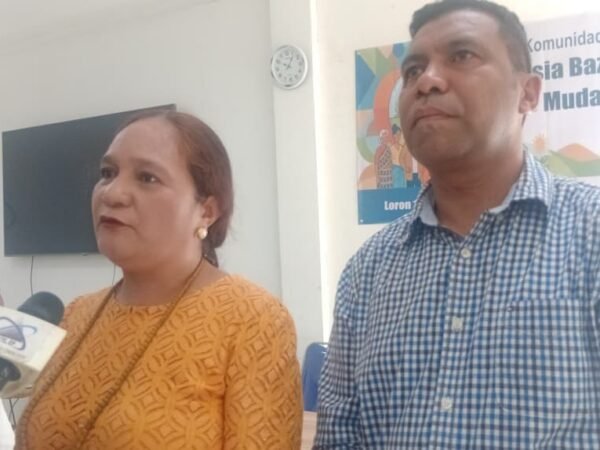
Dili, June 19, 2026 (Media Democracia) – Rede Feto Timor-Leste (RFTL) with Weaving Women’s Voices in Southeast Asia (WEAVE) hold a workshop on “Empowering Communities to Address GBV and Climate Challenges in Timor-Leste” to discuss the importance of strengthening communities to respond to climate change challenges and gender-based violence (GBV) in Timor-Leste.
The main objective of this Workshop is to advocate for a gender responsive protection system to respond to natural disasters in Timor-Leste, but two major past experiences have shown that the impact on vulnerable groups is very severe.
“When we discussed with the Government, partners, civil society, and local authorities, they concluded that when disasters happen, those who are most vulnerable are people with disabilities, LGBTQI+ communities, children, and the elderly. This double risk affects many issues they face during a disaster period.” RFTL President told journalists at the Fokupers Hall, Farol, Dili (18/06)
In addition, on how to strengthen a system, this consultation opened with the idea of exploring the experiences communities have faced, then it will be taken to mapping and discussion to define a good referral pathway for the future. The objective is to guarantee rapid response to emergency situations with a feminist and humanitarian approach, because climate emergency situations can increase the risk of gender-based violence.
Zelia said that during this time RFTL has been working together with partners from the Philippines, the Women League Bureau organization, with budget support from the Women Regional Fund. Even though the budget is less than $5 thousand to less than $4 thousand, for us it’s not about big or small budgets, but about a project or initiative that is relevant and truly fits the context.
This initiative aligns with the advocacy strategic plans that Rede Feto is currently carrying out in Timor-Leste. The partnership will not end here and discussion will continue at the regional level to create a regional guideline.
“To push the advocacy process linking women and climate change, and what we want to appreciate from the will of this operation is how we can reinforce our knowledge, approach, and discuss ideas on how to build protection systems and emergency response systems in our country with a feminist and humanitarian approach.” She added.
At the same place, UN representative Dano de Sousa said that climate change isn’t just an environmental problem but it is also important to involve women in all processes, from planning, implementation to monitoring activities related to climate change adaptation and mitigation.
“He referred to a study done after the big floods on 4 April 2021, which showed that some emergency shelters were not safe for women and girls. Problems included lack of clean water, fire, lighting, and sanitation facilities that were separated between women and men. Situations like this increase the risk of gender-based violence, including sexual violence.” He said.
He explained that when many people have to rest together in places without privacy and with insufficient security, the risk of sexual violence increases. That’s why women’s participation is very important to guarantee climate change responses.
“Climate change responses must address community needs. Women have specific experience and knowledge about family and community needs, especially in times of emergency. So social justice and gender equality must be an important part of all efforts to face climate change in Timor-Leste.” he concluded.
Reporting: Leozalia, Juliana
Photo: Leozalia