
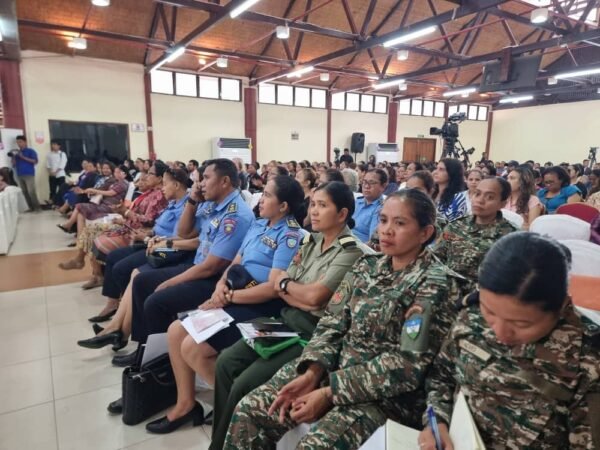
Dili, 28 October 2026 (Média Democracia) – The Government of Timor-Leste, through the Secretariat of State for Equality, organized a National Seminar to commemorate the 50th National Women’s Day of Timor-Leste, which is celebrated every 3 November. This commemoration is not only to celebrate, but also to value the struggle, sacrifice and contribution of Timor-Leste women in the process of national liberation and national development.
In a seminar held on Monday (26/10), the interim Secretary of State for Equality, who now holds the position of Deputy Minister of Social Solidarity and Inclusion, Céu Brites, said the 50th commemoration uses the theme “Women of Timor-Leste: Celebrating 50 Years of Equality and Inclusion”.
She explained that the seminar was an opportunity to reflect on the progress that Timor-Leste has achieved in promoting gender equality, and the challenges that need to be addressed to ensure equal rights and opportunities for all women.
Céu Brites also paid special tribute to the late Maria Tapó, a member of the Popular Organization of Timorese Women (OPMT), who died on the front line on November 3, 1975.
“This day is a reference to the commemoration of National Women’s Day, which began in 1976,” said Céu Brites in her speech.
She said women who participated in the Armed Front, Clandestine Front and Diplomatic Front had an important contribution in the struggle for the liberation of Timor-Leste
“Women on the Armed Front support the struggle in difficult conditions. Women on the Clandestine Front carry information, organize support and face risks, while women on the Diplomatic Front carry the voice of the Timorese people to the international community,” she said.
According to Céu Brites, the testimonies and stories of women who participated in the national liberation struggle have great value for education and collective memory. Therefore, these stories need to be documented with rigor and respect, so that the new generation can understand the role of women in nation building.
“Freedom is the result of unity, solidarity and sacrifice of the entire people. Therefore, our responsibility is to transform historical memory into concrete action to defend women’s rights, strengthen leadership and ensure equal opportunities for today’s and future generations,” he said.
She said Timor-Leste has achieved important progress in the recognition of women’s rights, enshrined in the Constitution, legislation, public policy and international commitments.
Women have also contributed to the National Parliament, Government, public administration, education, health, agriculture, business and community leadership.
However, Céu Brites affirms women will face challenges in access to education, employment, capital, markets and leadership positions. In rural areas, family care responsibilities and often unremunerated domestic work can limit women’s opportunities to develop capacity and participate in decision-making.
Another challenge is gender-based violence and discrimination, which threaten women’s safety, dignity and freedom. Therefore, he stressed the need to strengthen prevention, protection of victims and survivors, referral services and access to justice.
The Secretariat of State for Equality also appealed to families, community leaders, state institutions and civil society to work together to prevent violence and promote a culture of respect in society.
“Equality must be realized in opportunities, budgets, programs and public services that respond to the needs of all citizens,” he said.
To build an inclusive and sustainable Timor-Leste, Céu Brites identified five priorities that need attention from the Government and partners.
First, ensure access to quality education, vocational training, digital literacy and leadership development for girls and young women.
Second, foster opportunities for rural women, farmers and entrepreneurs to access capital, credit, technology, training and markets, and promote the sharing of family care responsibilities between women and men.
Third, strengthen opportunities for women to lead and participate in decision-making processes at the national, municipal, suku, village and private sector levels.
Fourth, strengthen law enforcement, equality education, protection services and support for survivors of violence, with guarantees of dignity, security and access to justice.
Fifth, integrate gender and social inclusion perspectives into program planning, budgeting and evaluation, with data disaggregated by sex, age and disability status, to ensure that public decisions are based on evidence.
She explained that the implementation of these priorities requires cooperation between the Government, the National Parliament, justice institutions, the private sector, women’s organizations, civil society, development partners and the community.
Therefore, she hopes that the National Seminar can produce concrete recommendations, clear priorities and commitments that can be implemented and evaluated, so that the results of the discussions bring real change to the lives of women and girls.
Céu Brites emphasized that the commemoration of the 50th National Women’s Day must be a moment to reaffirm our commitment together, to ensure that girls can learn in a safe environment, young women can achieve their dreams, and women can lead and participate in the decision-making process.
She also advocates that rural women should have the opportunity to develop their economy, women with disabilities should have equal opportunities, and all women can live free from violence and discrimination.
“The commemoration of the 50th National Women’s Day must be a moment to reaffirm our commitment together. Our history gives courage, our progress gives hope, and our responsibility obliges us to continue fighting. Timor-Leste women must continue to strengthen unity and solidarity to achieve equality and inclusion. inclusion,” he concluded.
The National Seminar was attended by the President of Commission F of the National Parliament, which deals with education, health, social security and gender equality; national and international partners; civil society; PNTL; F-FDTL; Chairman of the CAC; President INDICCA; Mother; associations of people with disabilities; university students in Dili; and referral network members from various ministries.
Reporting: Octaviana da Costa
Photo: Octaviana da Costa